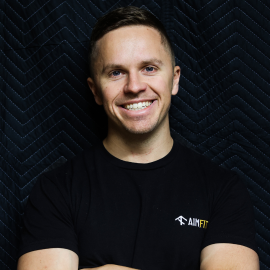
CBT Weightlifting and Anxiety
When I was younger, I struggled with depression and anxiety for about 10 years.
As a result, I experienced panic attacks, low self-esteem, and chronic chest pain.
Over that decade, I tried many different therapies. The best way I can describe them is as pieces of a puzzle—each offering insight into my brain and how it worked, but none of them fully effective on their own.
For example, I learned about positive feedback loops: when you feel bad, you think negative thoughts, which worsen how you feel, reinforcing the cycle. I remember learning this, then having a panic attack on the drive home and trying breathing exercises my psychologist had taught me. Sometimes they helped, sometimes they didn’t.
There were many other tools, groups, and therapies that nudged me in the right direction. But it wasn’t until about nine years in that things really started to change—when I discovered Cognitive Behavioral Therapy (CBT) around the same time I got deeply into heavy weightlifting.
My understanding of CBT was simple:
First, become aware of what you’re thinking.
Then, connect those thoughts to the emotions and physical symptoms you’re experiencing.
Once I started paying attention, I realized how constant my negative thoughts were. That awareness alone showed me how strongly they were influencing my emotional—and physical—state.
The next step was interruption.
The goal wasn’t forced positivity, but recognizing a negative thought and interrupting it with something more neutral, breaking the cycle.
This is where weightlifting came in—almost by accident.
I became focused on deadlifting, specifically on how much I could lift. I loved the challenge and how it made me feel afterward. From my understanding, the central nervous system (CNS)—your brain—must send powerful signals to your muscles under stress, whether physical or emotional. The heavier the load and the more muscles involved, the greater the CNS demand.
Deadlifts demand almost your entire body. Over a few years, at a bodyweight of about 150 lbs, I worked my deadlift to over 450 lbs.
Toward the end of that journey, after heavy sets, my CNS would be so taxed that everything went quiet. I could barely see, hear, or think—and with that silence came relief.
One day, after finishing a session, I practiced CBT. I realized it was much easier. My CNS was so fatigued that neutral and positive thinking came naturally. Over time, this became consistent.
Then one day, walking back to my dorm, it hit me:
My chest pain was gone.
It was an incredible moment. I could sustain positive thinking for long periods, and negative thoughts became rare. It took about three months to reach that point, but once I did, I felt like I finally understood how to take control of my mind.
Today, I still notice small signals when I’m not training intensely enough. For example:
If I normally sleep 8 hours but start waking up after 7 consistently, it’s a cue to train harder.
If I become more irritable or easily frustrated, I know I need to work out.
The difference now is awareness. Instead of feeling anxious about not knowing what’s wrong, I know what I can adjust.
At some point, I’d love to speak with someone who has a high-level understanding of what’s happening on a molecular or neurological level, so I can better explain this when clients ask about it. It’s not uncommon for people interested in personal training to also be seeking deeper self-improvement.
So, if you’ve read this far—thank you. And if you know someone who would be open to discussing this, privately or publicly (even on a podcast), I’d love to learn more. I believe this is another step toward helping not only myself, but others live better lives.
—Aaron